Protect Your Investment: A Guide to Commercial Roof Maintenance for Baltimore Businesses
For any Baltimore business owner or property manager, the roof over your head is more than just a structure; it's a critical asset that protects your inventory, equipment, employees, and customers. However, between our hot, humid summers and cold, icy winters, commercial roofs in Maryland take a serious beating. Ignoring your roof until a leak appears can lead to costly operational disruptions, damaged assets, and emergency repairs that strain your budget. Proactive maintenance isn't an expense—it's one of the smartest investments you can make in your property's longevity and your business's continuity. This guide will walk you through the essentials of a robust commercial roof maintenance plan and explain how it can save you significant time and money in the long run.
Why Proactive Maintenance is a Financial Necessity
Many property managers operate under the “if it ain’t broke, don’t fix it” philosophy. When it comes to a commercial roof, this approach is a recipe for disaster. A small, undetected puncture in the roof membrane or a clogged drain might seem insignificant, but over time, it can lead to saturated insulation, structural decay, and interior water damage. The cost of reacting to a major roof failure—including business downtime, inventory loss, and extensive repairs—far exceeds the cost of a scheduled maintenance program.
Regular, professional maintenance accomplishes several key goals:
- Maximizes Roof Lifespan: A commercial roof is a significant capital expenditure. A consistent maintenance plan can add years to its service life, ensuring you get the maximum return on your initial investment.
- Prevents Major Disasters: Catching small issues early prevents them from escalating. Sealing a failing seam is a simple fix; replacing a large section of waterlogged roof deck is a major, expensive project.
- Maintains Warranty Compliance: Most manufacturer warranties for commercial roofing materials require proof of regular professional inspections and maintenance. Neglecting this can void your warranty, leaving you fully responsible for repair costs.
- Improves Budgeting: Proactive maintenance allows you to plan and budget for minor repairs and eventual replacement, eliminating the financial shock of a sudden roofing emergency.
The Core Components of an Effective Maintenance Plan
A comprehensive roof maintenance program is more than just a quick look around. It's a systematic process designed to identify and address potential weaknesses before they fail. At Kohn Contracting, our approach is built on thoroughness and clear communication, ensuring you always know the exact condition of your roof.
A typical maintenance visit should include:
- Thorough Visual Inspection: A trained technician will perform a detailed roof assessment, examining the entire surface for signs of wear and tear. This includes checking for punctures, blisters, or cracks in the membrane.
- Flashing and Penetration Check: The most common sources of leaks are failures around flashing (the metal strips that seal roof edges) and penetrations like HVAC units, vents, and skylights. These areas require careful inspection to ensure seals are intact and watertight.
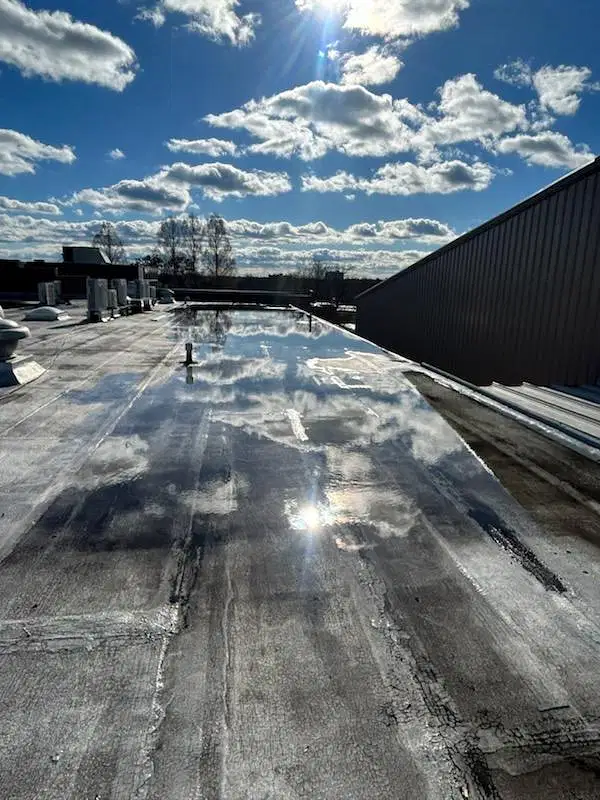
- Drainage System Cleaning: Clogged drains, scuppers, and gutters are a primary cause of ponding water. This standing water accelerates the deterioration of roofing materials and adds significant weight to the structure. A key part of maintenance is clearing all debris to ensure proper water flow.
- Minor Repairs and Preventative Care: During an inspection, our team can address minor issues on the spot, such as applying sealant to a cracked seam, patching a small puncture, or removing debris that could cause damage in the future.
- Detailed Reporting: You should receive a comprehensive report after every visit, complete with photos and a clear description of your roof's condition, any work performed, and recommendations for future action. This documentation is vital for your records and for any potential warranty claims.
Understanding Your Commercial Flat Roof System
For many commercial buildings in The City, a flat or low-slope roof is standard. These roofs require specific materials designed for durability and water resistance. Here are some of the most common flat roof systems you'll find:
-
TPO (Thermoplastic Olefin): This is a single-ply white membrane known for its exceptional energy efficiency. The reflective surface helps keep buildings cooler during Baltimore's hot summers, which can lead to lower HVAC costs. TPO seams are heat-welded, creating a very strong, monolithic bond that is highly resistant to leaks.
-
EPDM (Ethylene Propylene Diene Monomer): Often called a “rubber roof,” EPDM is a synthetic rubber membrane that has been a trusted industry standard for decades. It is known for its superior durability, flexibility in extreme temperatures, and long lifespan, making it a resilient choice.
-
PVC (Polyvinyl Chloride): Another single-ply membrane, PVC is renowned for its strength and resistance to damage. It stands up exceptionally well to chemicals, grease, and even fire, making it an ideal choice for restaurants, manufacturing plants, or other industrial facilities.
-
Asphalt Systems (Built-Up or Modified Bitumen): These are the traditional workhorses of the flat roofing world. Built-Up Roofing (BUR) involves multiple layers of asphalt and reinforcing fabrics, while Modified Bitumen (Mod-Bit) uses asphalt with added polymers for enhanced flexibility and strength. Both offer exceptional durability and puncture resistance.
The best choice depends on your building's specific use, energy goals, and budget. A professional commercial roofing contractor can perform a thorough assessment to recommend the ideal system for your property.
Your Partner in Protecting Your Baltimore Property
At Kohn Contracting, we understand that managing a commercial property comes with a long list of responsibilities. Your roof shouldn't be a source of constant worry. We build long-term partnerships with our clients, grounded in our core values of putting “People First” and delivering uncompromising “Quality.” As a fully licensed and insured contractor (MHIC #159484), we provide the peace of mind that comes from knowing your property is in capable, professional hands.
Don't wait for a small drip to become a major disruption. A proactive maintenance plan is the most effective way to protect your building, control costs, and ensure your business operations continue without interruption. Let our team of experienced flat roof specialists help you create a customized maintenance schedule that fits your property's needs and your budget.
Ready to secure your investment? Contact Kohn Contracting today to schedule a comprehensive commercial roof assessment and learn more about our preventative maintenance programs for businesses throughout the Baltimore area.